
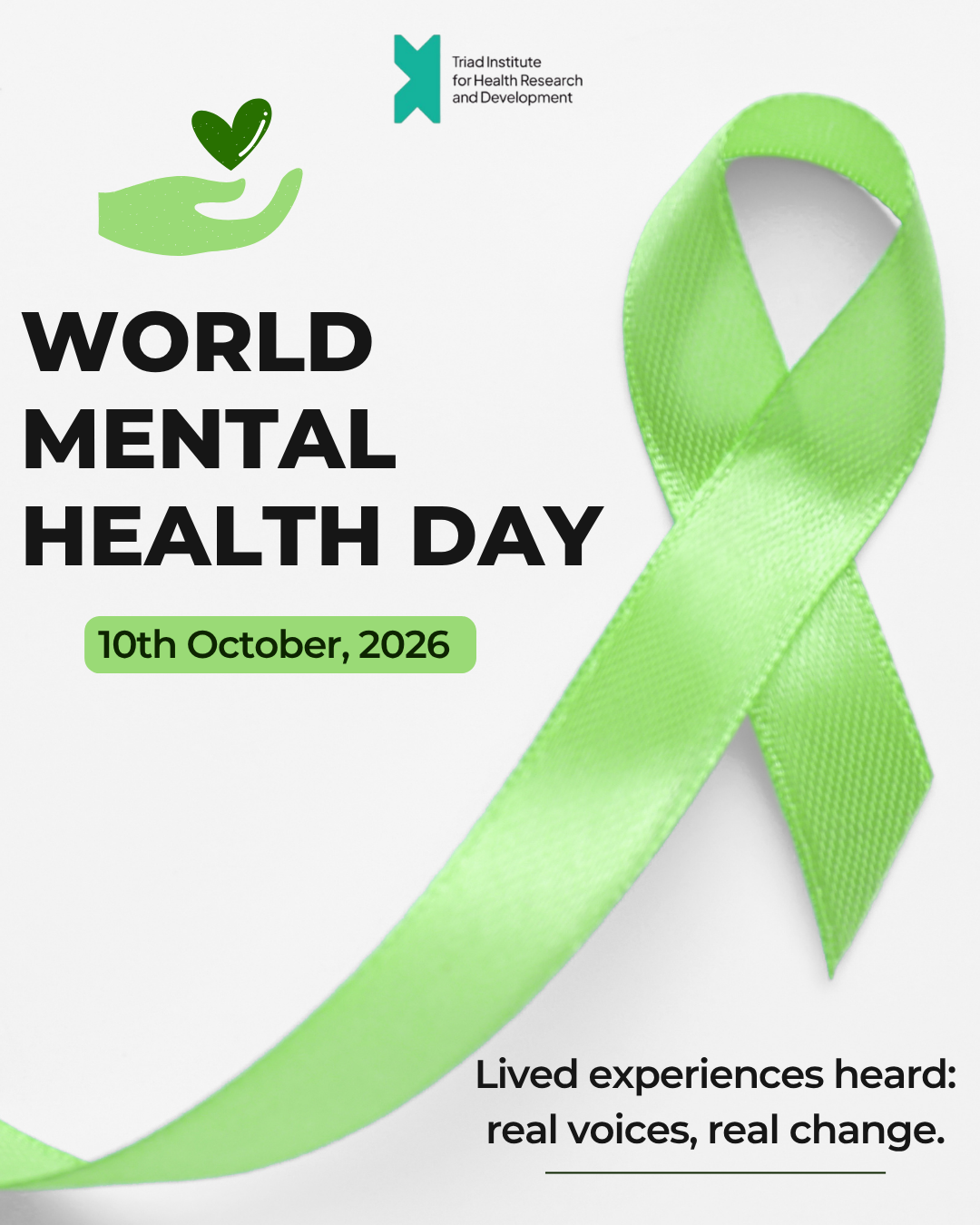

Nobody had told Hadiza that anxiety could exist alongside ambition, that grief comes knocking without warning, or that the person putting the most pressure on her was herself.
Hadizah has always been described as someone full of life. Someone bubbly who fills up every room she walks in. Well, at least that was how she was always described by her 3 elder siblings who adored her. As the years went by, she moved through life as anyone her age. School, friendships, dreams, and aspirations she looked forward to. Life was simple and full of joy until it wasn’t.
After years of illness, which slowly dulled the life out of her mother’s eyes, she finally passed, leaving her behind with a very traumatic experience. Hadizah had witnessed the passing of her mother. The days after were a blur. She felt empty, not quite like someone grieving. Just there. School became an escape from reality, and in that, she took solace.
She somehow learnt to live with it. Breaking down quietly in the confines of her room. Reminiscing and replaying memories with her siblings and just living one day at a time. She worked hard as usual, and oh, how she always got results for her efforts until she didn’t.
A setback was all it took to crush down the walls she had carefully built. Her only solace and escape now felt like walking through the Amazon. She had developed anxiety in her most confident zone. Giving up felt easier, but that meant feeding the Silent Demon, which was slowly eating her out. So she did what she knew best. Study.
She finally had a breakthrough and felt that she had escaped that dark place. Though it still felt heavy some days, and a light thought here and there dragged her back to that tiny dark space of fear and self-doubt. The panic attacks sometimes kept her fighting for air, and she began to dread the next episode, never knowing where or when it would find her, and she found herself worrying even on days when nothing was wrong.
Eventually, she let someone in, not because she wanted to, but because she needed to. The weight had gotten too heavy to carry alone, constantly putting pressure on her. And slowly, things began to feel lighter. Yet every now and then, she found herself asking a question she couldn’t quite answer. Was it fear that pushed her now, or the desire she once had? It was a difficult question, one she sometimes brushed aside, and one she really never wanted to answer.
Though Hadiza has come a long way, she’s nowhere near perfect, and in fact, has come to the realization that perfection is sometimes not achievable. She’s now learned that a disappointing result doesn’t erase her efforts or define her worth, and that worrying about the future without working towards it is overly tiring. She sometimes misses her mother, but still shows up every day, hoping that one day she makes her proud. My name is Hadiza, and this is my story.
Parallel Paths: Alex’s Story
While Hadiza’s anxiety was triggered by the heavy silence of loss and academic pressure, a few miles away, Alex was fighting a different version of the same unseen battle—one that started the moment his alarm went off.
Every morning, before even getting out of bed, Alex would automatically reach for his phone. The routine was always the same: open social media and scroll. But his feed was an endless loop of intense news, violent clips, and deeply disturbing content. As he lay there viewing the distressing media, a physical shift would happen silently. His breathing would become shallower. A heavy fatigue would set in before his day had even begun, and a knot of stress would slowly build in his chest.
Over time, this constant, first-thing-in-the-morning exposure to the world’s trauma took a massive toll on Alex’s mental well-being. It became a quiet, repetitive cycle of digital doom that left him feeling hyper-vigilant and drained. Like Hadizah, Alex reached a point where he realized this heavy weight couldn’t be carried alone. By recognizing how much his online environment was reshaping his inner peace, he began the difficult work of stepping back and setting boundaries for his mind. “I am learning that protecting my peace starts with what I let into my space,” Alex shares. “My name is Alex, and this is my story.”
Beyond the Story: Understanding Mental Health
The World Health Organization (WHO) defines health as “a state of complete physical, mental and social well-being and not merely the absence of disease or infirmity.” This means that being healthy goes beyond not being physically ill. Our mental and social well-being matter, too.
But what exactly is mental health?
According to the WHO, mental health is a state of well-being that helps us cope with life’s stresses, recognise our abilities, learn and work well, and contribute to our communities. Life can be overwhelming sometimes. Grief, difficult experiences, academic pressure, digital overload, and relationship problems can affect how we feel and cope with everyday life. Research also shows that our mental health is influenced by more than individual experiences alone. Our relationships, living conditions, online environments, and the support available to us can all play a role.
Mental Health in Numbers
Mental health challenges affect people across the world. A 2026 analysis published in The Lancet, using data from the Global Burden of Disease Study 2023, estimated that approximately 1.17 billion people were living with mental disorders worldwide in 2023. Anxiety and depressive disorders were among the leading contributors to this burden (Santomauro et al., 2026).
These figures are a reminder that mental health is not a minor issue, nor is it something that affects only a particular group of people. Yet, getting help is not always easy. Some people fear being judged, while others may not know where to turn or may not have access to appropriate care. Research on mental health care in low- and middle-income countries has also highlighted barriers that prevent people from seeking or receiving support (Morris et al., 2023).
Real Voices, Real Change
Hadizah and Alex’s stories remind us that someone’s struggles may not always be obvious. A person can appear fine on the outside while dealing with a quiet storm of internal anxiety or the subtle draining effects of modern daily habits.
This is exactly why the World Federation for Mental Health designated this year’s theme as “Lived experiences heard: real voices, real change.” We cannot build better support networks, healthier digital spaces, or stronger communities by relying solely on statistics. We build them by listening to real human experiences.
Mental health conversations should not happen only when someone reaches a breaking point. They should be part of how we care for ourselves and one another. We can all play a part in making these conversations easier by:
- Listening without judging or rushing to offer immediate, simplistic solutions.
- Checking in regularly on our friends and family, recognizing that different things trigger anxiety for everyone.
- Encouraging intentional boundaries, whether that means stepping away from a stressful task or unplugging from disturbing digital media.
This World Mental Health Day, let us make room for honest conversations, offer one another understanding, and remember that sharing your voice and asking for help is a profound act of strength.
References
GBD 2023 Mental Disorder Collaborators. (2026). Updated trends in the global prevalence and burden of mental disorders, 1990–2023: A systematic analysis for the Global Burden of Disease Study 2023. The Lancet, 407(10543), 2040–2064. https://doi.org/10.1016/S0140-6736(26)00519-2
Huggard, L., Murphy, R., O’Connor, C., & Nearchou, F. (2023). The social determinants of mental illness: A rapid review of systematic reviews. Issues in Mental Health Nursing, 44(4), 302–312. https://doi.org/10.1080/01612840.2023.2186124
van den Broek, M., Gandhi, Y., Sureshkumar, D. S., Prina, M., Bhatia, U., Patel, V., Singla, D. R., Velleman, R., Weiss, H. A., & Garg, A. (2023). Interventions to increase help-seeking for mental health care in low- and middle-income countries: A systematic review. *PLOS Global Public Health*, 3(9), Article e0002302. https://doi.org/10.1371/journal.pgph.0002302
World Health Organization. (n.d.). Constitution of the World Health Organization.
World Health Organization. (2026, September 11). Mental health. https://www.who.int/news-room/fact-sheets/detail/mental-health-strengthening-our-response
World Health Organization. (2026, September 11). Mental disorders.
Leave a Reply