
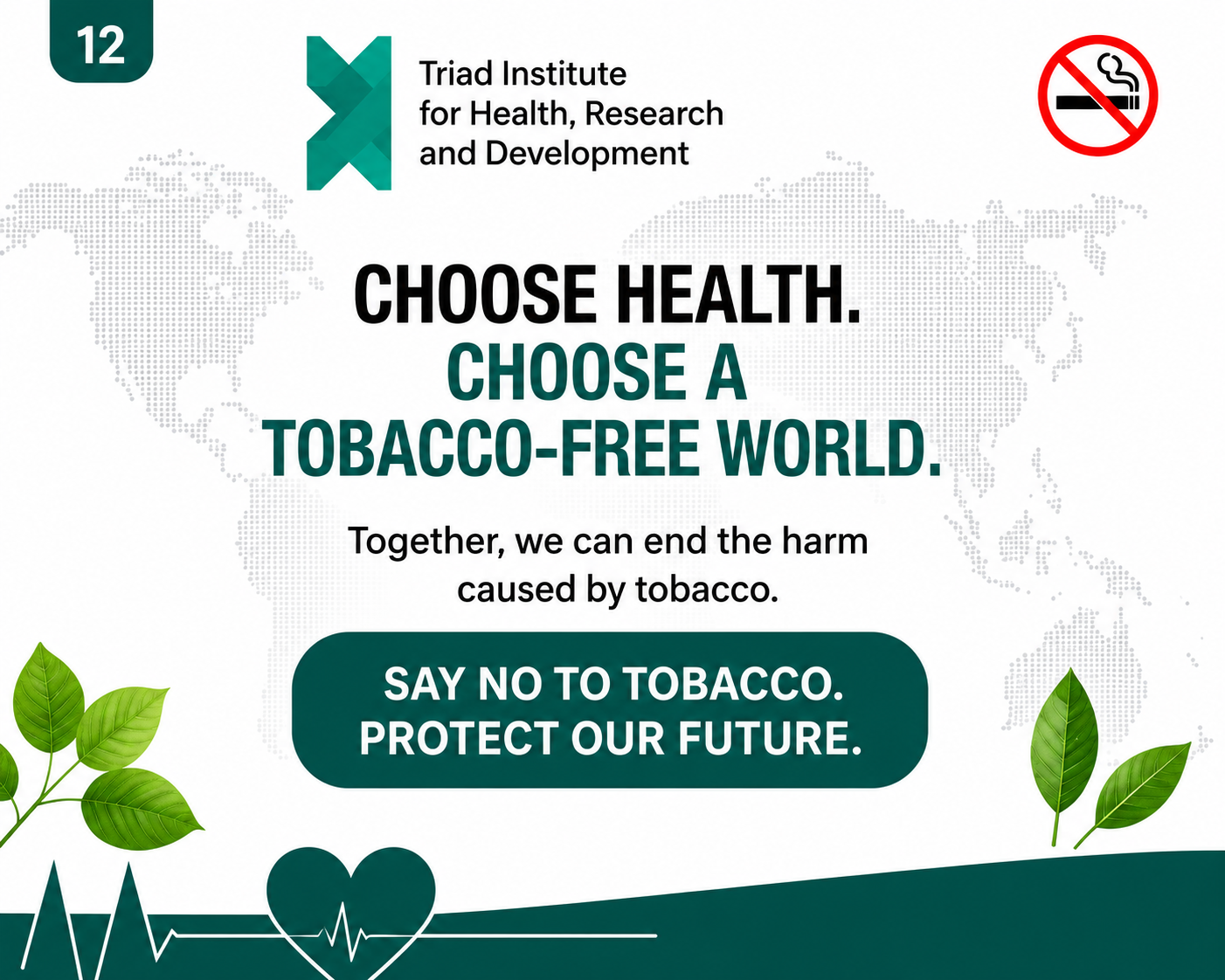

Tobacco use remains one of the most preventable causes of illness or death globally according to the WHO. While millions of active smokers continue to gain attention regarding the effect on them, a larger population of non-smokers suffer the health consequences of involuntary exposure to tobacco smoke. Research has shown that there exists about 20–30% risk for passive smokers to develop lung cancer and heart disease due to secondhand smoking. World No Tobacco Day creates an avenue for awareness that tobacco-related harm extends beyond active smokers and poses a significant threat to the community.
Passive smoking, also known as environmental tobacco smoke or secondhand smoke, refers to the process in which non-smokers — who may be passersby, colleagues, friends, etc. — inhale harmful smoke released from burning tobacco products and smoke exhaled by smokers. Generally, tobacco is a common name for several plants in the genus Nicotiana, and products prepared from the cured leaves of these plants. After the leaves are dried, they can be used for cigars, shishas, pipes, snuff, etc., as they contain the highly addictive stimulant alkaloid nicotine as well as harmala alkaloids.
Research indicates that a substantial proportion of lung cancer cases among non-smokers can be attributed to passive smoking. Women and children are often affected due to high levels of exposure in domestic settings.
The Link Between Tobacco Smoking and Cardiovascular Disease and Cancer Risk
Tobacco products contain constituents such as nicotine, carbon monoxide, benzene, formaldehyde, heavy metals, and multiple carcinogenic substances like polycyclic aromatic hydrocarbons and tobacco-specific nitrosamines. Many individuals mistakenly believe that passive smoking is relatively harmless because the exposed individual is not actively smoking. However, secondhand smoke contains these toxic chemicals, which are capable of causing biological damage.
The Institute of Medicine (US) Committee on Secondhand Smoke Exposure and Acute Coronary Events indicated that passive smoking increases the occurrence of coronary artery disease by 25–30%. Cardiovascular health plays an essential role in circulating oxygen and nutrients in the body through blood vessels. Constituents present in tobacco products can damage the inner lining of blood vessels, known as the endothelium, thereby increasing the risk of cardiovascular diseases such as coronary artery disease, stroke, and other vascular conditions among non-smokers. Subsequently, carbon monoxide, a toxic gas, binds strongly to haemoglobin, reducing the blood’s oxygen-carrying capacity.
Furthermore, prolonged exposure to tobacco carcinogens leads to DNA damage, oxidative stress, and impaired cellular repair. Over time, this increases the likelihood of malignant transformation, especially in the tissues of the lungs.
Strategies to Reduce Passive Smoking Exposure
Effective strategies to reduce passive smoking exposure require coordinated actions from multiple sectors. Smoke-free legislation in public spaces — including workplaces, schools, healthcare facilities, transportation systems, and households — remains one of the most effective public health interventions in protecting non-smokers from involuntary exposure. Additionally, public education on the harmful effects of tobacco use for both active and passive smokers, including cardiovascular diseases and cancer risks, must be carried out consistently, with emphasis on the fact that there is no safe level of exposure to tobacco smoke.
Conclusion
Passive smoking is a significant yet preventable public health issue linked to tobacco use, increasing the risk of serious health conditions in non-smokers, including lung cancer and heart disease. On World No Tobacco Day, the emphasis is on the broader impact of tobacco harm on communities. Implementing strong tobacco control policies and promoting smoke-free environments are crucial for minimising exposure and improving public health, making the prevention of passive smoking a key strategy in reducing tobacco-related diseases globally.
Leave a Reply