
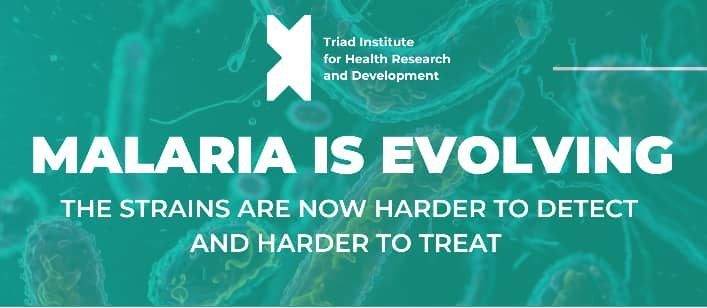

World Malaria Day, 25 April 2026
The global malaria burden remains staggering. According to the WHO World Malaria Report 2024, there were an estimated 263 million cases and 597,000 deaths worldwide in 2023, roughly 720,000 new infections every single day. But hidden within that figure is a more troubling story, one that does not make it into most World Malaria Day messaging: in 42 malaria-endemic countries, mutated strains of the malaria parasite were also documented that same year. Strains that, in some cases, standard diagnostic tools cannot reliably detect.
This is not a future risk. It is a present one.
The Test You Trust May Not Always Work
Rapid diagnostic tests (RDTs) have been transformative in malaria control, particularly in settings where laboratory infrastructure is limited. Most of these tests work by detecting specific proteins produced by Plasmodium falciparum, the deadliest malaria parasite. The most common target is a protein called HRP2, encoded by the pfhrp2 gene, and its closely related counterpart HRP3.
The problem is this: some parasite strains have developed genetic deletions in the pfhrp2 and pfhrp3 genes. Without these genes, the parasite produces little to no HRP2 or HRP3 protein. When a rapid test looks for a protein that is no longer being produced, it finds nothing and returns a negative result. The patient is infected. The test says otherwise.
This phenomenon, known as HRP2-based diagnostic evasion, has now been documented across multiple countries in sub-Saharan Africa, the region that continues to carry the highest global malaria burden. For health workers relying on RDTs as the first and often only line of diagnosis, a false negative is not just an individual error. It is a missed opportunity to stop transmission.
What Happens When Diagnosis Fails
The consequences of a missed malaria diagnosis compound quickly.
A person who tests negative but is actually infected will not receive treatment. They will remain in the community, infectious, continuing to transmit the parasite through mosquito bites. If they do eventually seek care, perhaps when symptoms worsen, they may receive incomplete or inappropriate treatment, giving the parasite additional opportunity to adapt.
This is where diagnostic failure and drug resistance intersect. Resistance does not emerge randomly. It is driven by selective pressure: parasites that survive treatment, whether because of incomplete drug courses, substandard medicines, or delayed diagnosis, are the ones that pass their survival traits to the next generation. Over time, what was once a manageable infection becomes harder to treat.
We have seen this before. Chloroquine was once the backbone of malaria treatment across Africa. Widespread resistance rendered it largely ineffective, and the global health community was forced to pivot to artemisinin-based combination therapies (ACTs), now the first-line treatment for P. falciparum malaria. Today, early warning signs of reduced artemisinin sensitivity are being monitored carefully in parts of Africa, precisely because the world cannot afford to lose another first-line drug.
Why This Matters in the Nigerian and African Context
Nigeria accounts for a disproportionate share of the global malaria burden, consistently ranking among the two or three highest-burden countries in the world. The combination of high transmission intensity, heavy reliance on RDT-based diagnosis, widespread self-medication, and inconsistent treatment completion creates conditions in which both diagnostic evasion and drug resistance can quietly gain ground.
Sub-Saharan Africa bears approximately 94% of all global malaria cases and deaths, according to the WHO World Malaria Report 2024. In 2023, the region recorded an estimated 246 million cases and 567,000 deaths, 76% of which were children under five. The Democratic Republic of Congo, Uganda, Mozambique, and Nigeria together account for nearly half of all malaria deaths globally, making the African context inseparable from any serious discussion of malaria elimination.
Nigeria alone accounted for approximately 26% of global malaria cases and 31% of malaria deaths in 2023, making it the single highest-burden country in the world. An estimated 68 million malaria episodes occur in Nigeria annually, with children under five and pregnant women at greatest risk. Coverage of core malaria interventions, including insecticide-treated nets, indoor residual spraying, and seasonal malaria chemoprevention, remains uneven across states, leaving significant portions of the population inadequately protected.
Surveillance for pfhrp2/3 gene deletions is not yet systematic or widespread in Nigeria. This means the true extent of HRP2-negative infections, and the false negatives that follow, is likely underestimated. Communities may be experiencing a silent diagnostic gap without the data systems in place to detect it.
This is not a reason for alarm. It is a reason for urgency, in research, in surveillance investment, and in how health systems think about the reliability of diagnosis.
What Needs to Change, and What Each of Us Can Do
The response to this challenge operates at two levels.
At the system level, what is needed is investment in alternative diagnostic approaches that do not rely solely on HRP2 detection, including microscopy, pLDH-based RDTs, and expanded molecular surveillance. Health systems need better tools, better training, and better data on where diagnostic failure is occurring. The global commitment encoded in this year’s theme, Driven to End Malaria, must translate into concrete investment in diagnostic infrastructure, not just treatment access.
At the individual level, the actions are more immediate. Test before treating: not every fever is malaria, and self-medicating without a confirmed diagnosis contributes directly to the resistance patterns described above. When treatment is prescribed, complete the full course, even after symptoms resolve. Stopping early is one of the most well-documented drivers of parasite adaptation. Use medicines sourced only from licensed pharmacies or clinics, as substandard antimalarials do not clear infections effectively and they accelerate resistance. And invest in prevention: insecticide-treated nets and eliminating standing water around the home remain among the most effective tools available.
The Bigger Picture
Ending malaria is not simply a matter of having a drug that works. It requires that infections are found before they spread, treated completely before parasites adapt, and prevented where possible so that the burden on diagnostic and treatment systems is reduced.
When diagnosis fails, transmission continues quietly. When treatment is incomplete, resistance strengthens silently. Both undermine the progress the world has worked for decades to achieve.
TIHRAD’s focus on this intersection, between antimicrobial resistance, diagnostic accuracy, and community health behaviour, reflects a conviction that the path to elimination runs through understanding, not just intention. The science is clear. The actions are available. What is needed now is the will to act on both.
References
Feleke SM, Reichert EN, Mohammed H, Brhane BG, Mekete K, Mamo H, et al. Plasmodium falciparum is evolving to escape malaria rapid diagnostic tests in Ethiopia. Nature Microbiology. 2021;6:1289–1299. https://doi.org/10.1038/s41564-021-00962-4
Funwei R, Nderu D, Nguetse CN, Thomas BN, Falade CO, Velavan TP, et al. Molecular surveillance of pfhrp2 and pfhrp3 genes deletion in Plasmodium falciparum isolates and the implications for rapid diagnostic tests in Nigeria. Acta Tropica. 2019;196:121–125. https://doi.org/10.1016/j.actatropica.2019.05.016
Uwimana A, Legrand E, Stokes BH, Ndikumana JM, Warsame M, Umulisa N, et al. Emergence and clonal expansion of in vitro artemisinin-resistant Plasmodium falciparum kelch13 R561H mutant parasites in Rwanda. Nature Medicine. 2020;26:1602–1608. https://doi.org/10.1038/s41591-020-1005-2
Uwimana A, Umulisa N, Venkatesan M, Svigel SS, Zhou Z, Munyaneza T, et al. Association of Plasmodium falciparum kelch13 R561H genotypes with delayed parasite clearance in Rwanda: an open-label, single-arm, multicentre, therapeutic efficacy study. Lancet Infectious Diseases. 2021;21(8):1120–1128. https://doi.org/10.1016/S1473-3099(21)00142-0
World Health Organization. World Malaria Report 2024. Geneva: World Health Organization; 2024. Available at: https://www.who.int/teams/global-malaria-programme/reports/world-malaria-report-2024
Triad Institute for Health Research and Development Ltd/Gte (TIHRAD)
Leave a Reply