

The 2nd Africa Public Health Students’ Summit (PHSSAfrica2024) organized by the Africa Public Health Student Network (AfricaPHSN) was held from August 22 to 24, 2024, in Lagos, Nigeria. The summit was hosted by the AfricaPHSN Nigeria Working Group in collaboration with partners such as UNICEF Nigeria, Africa CDC, and others. Held in a hybrid format, the event attracted more than 500 in-person and virtual participants from over 30 countries. With the theme “Climate Change and Health: African Youth for a Resilient Continent,” the summit provided a vibrant platform for youth engagement, featuring 35 speakers and 23 sessions across five thematic tracks.
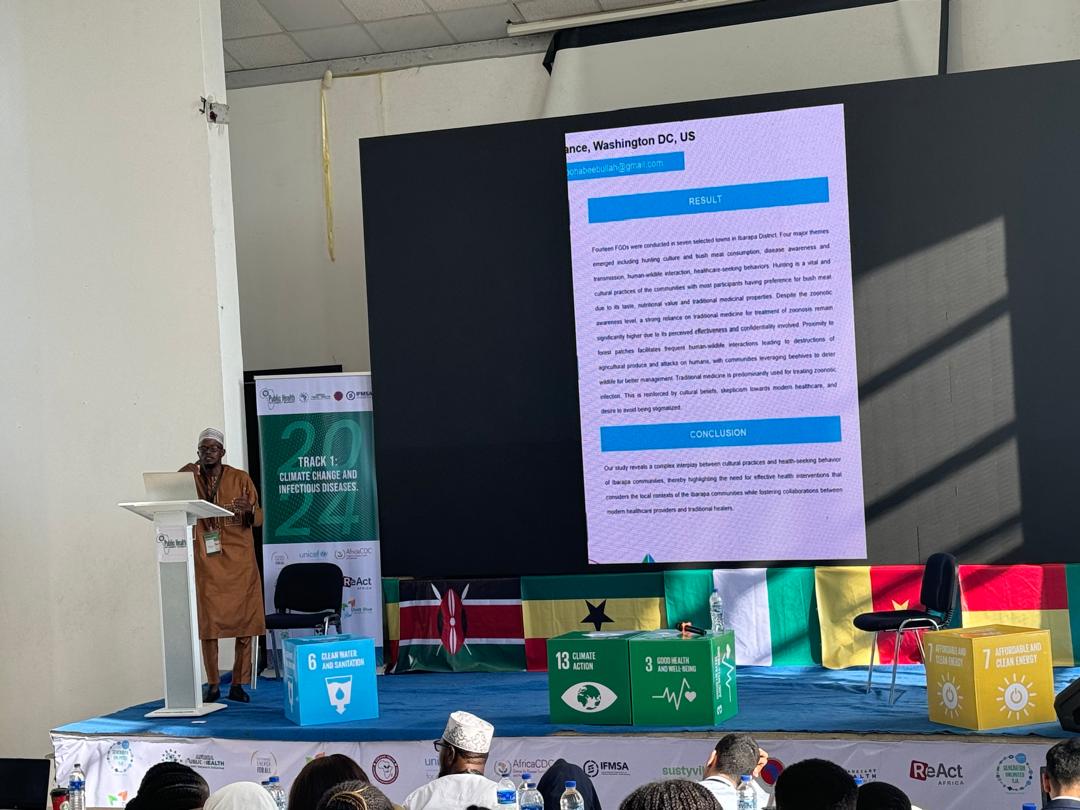
Representing Triad Institute for Health Research and Development (TIHRAD), our Research Fellow, Habeebullah Oladipo, presented his study titled “A Qualitative Study of Zoonotic Disease Awareness, Perception, and Health-Seeking Behaviors in Ibarapa, South-Western Nigeria.” His presentation shed light on how cultural practices, ecological dynamics, and access to healthcare shape the prevention and treatment of zoonotic diseases in rural Nigerian communities.
The study employed a qualitative research design involving 14 focus group discussions across seven towns in Ibarapa District. Participants included hunters, farmers, community leaders, and women who were selected through a multi-stage sampling technique. Discussions explored zoonotic disease awareness, human-wildlife interactions, and health-seeking behaviors. Using Nvivo software, data were analyzed through coding and thematic categorization. Four major themes emerged from the analysis—hunting culture and bush meat consumption, disease awareness and transmission, human-wildlife interaction, and healthcare-seeking behaviors.
Findings revealed that while communities are aware of zoonotic risks, traditional medicine remains the preferred treatment option due to cultural beliefs, perceived effectiveness, and confidentiality. Frequent human-wildlife encounters, driven by proximity to forest patches, increase the likelihood of pathogen spillover. Communities also reported adopting innovative methods such as using beehives to deter wildlife from destroying crops.
Habeebullah’s research underscores the importance of integrating local contexts into health interventions. It calls for collaboration between traditional healers and modern healthcare providers to ensure effective zoonosis prevention and treatment.
We are proud of his contribution to PHSSAfrica2024, which aligns with TIHRAD’s mission to advance the One Health approach through research, advocacy, and policy engagement. The summit also marked the launch of the African Youth Position Paper on Climate Change and Health, a youth-driven roadmap for a more resilient and sustainable continent.

Leave a Reply